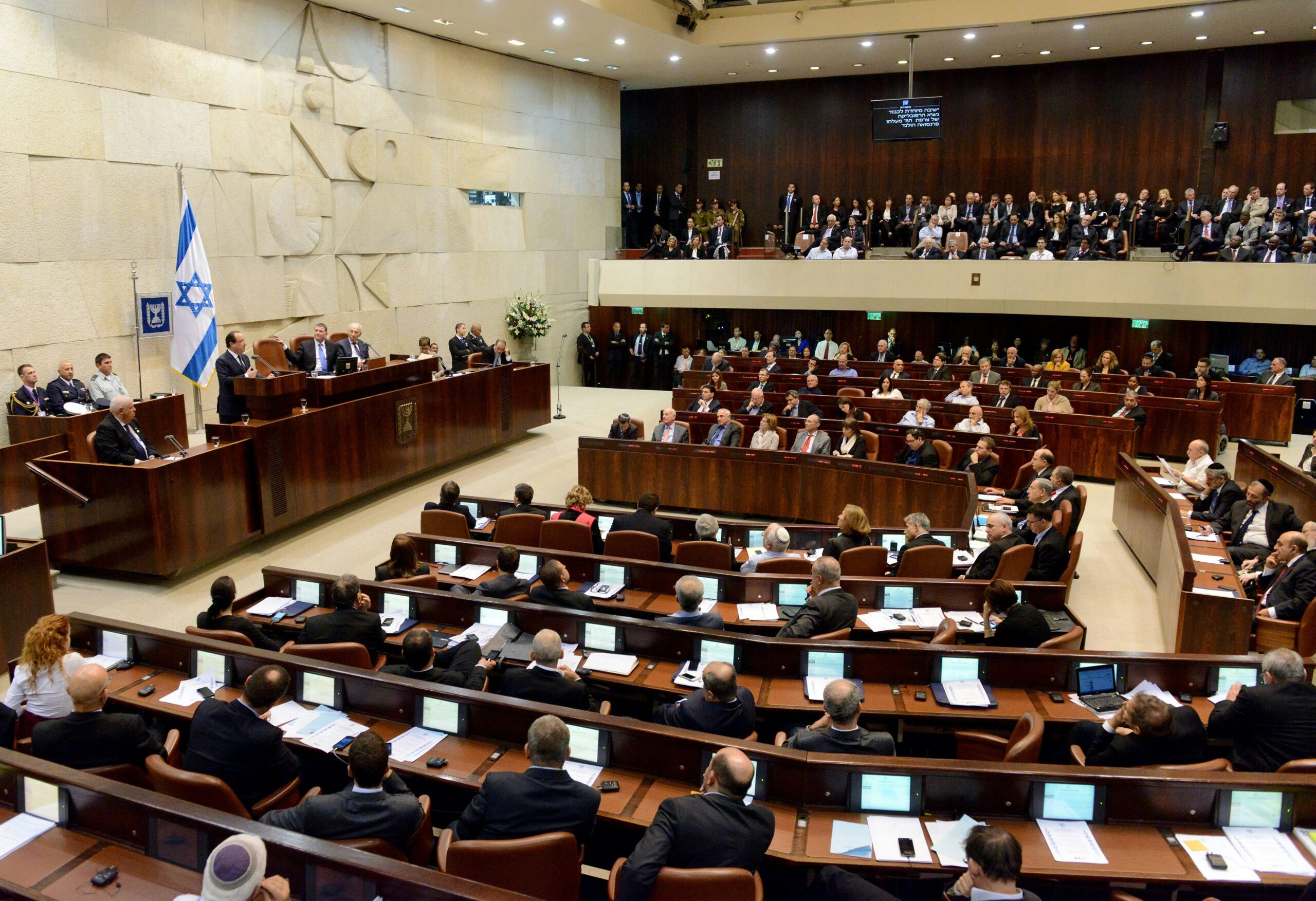
The parliamentary elections scheduled for 27 October 2026 come at one of the most critical moments in Israel’s modern history. The country is grappling with a profound political crisis and deep social polarization, while facing a fundamental question: what kind of state does it want to become?
At the heart of this struggle are two competing visions: a more open, secular-oriented state and an insular nationalist-religious model. These tensions have been intensified by the policies of the most right-wing government in Israel’s history, which has helped normalize political positions and practices that much of Israeli society would have rejected just three decades ago.
Israel’s current political situation cannot be dismissed as a mere anomaly. The country’s political system has long reflected deep cultural, religious, and ethnic divisions, which are particularly evident in coalition politics. Even small parties can wield disproportionate influence and shape government policy. In recent years, the most radical currents of the Israeli right, particularly its nationalist and religious wings, have exploited this dynamic. Recognizing Benjamin Netanyahu’s determination to remain in power, they have used their leverage to advance their own priorities.
The outgoing government reflects both the structural weaknesses of Israeli politics and broader ideological changes within society. Netanyahu’s prolonged dominance and the criminal proceedings against him have further intensified domestic tensions. Yet the government’s composition also reflects a shift that extends beyond the rightward turn following the Second Intifada of 2000-2005. Radical right-wing attitudes have gained ground in both secular and religious-nationalist circles. These currents reject liberal conceptions of the state and Palestinian aspirations, often framing Palestinian society primarily as a security threat and advocating extreme uses of force.
The current political balance did not emerge solely from the events of 7 October 2023. Netanyahu’s government was formed before Hamas’s attack, and its composition and policies cannot be explained simply by the trauma the attacks inflicted on Israeli society. Their roots lie in longer-term social and ideological transformations.
The elections are taking place amid continued military operations in the Gaza Strip. Although a ceasefire has formally been in effect since 10 October 2025, Israel’s interpretation of its terms has been selective, while continued violence has caused further civilian casualties. The humanitarian crisis in the war-ravaged territory is deepening, with winter approaching and shortages of shelter, healthcare, and basic necessities posing growing risks.
Violence is also escalating in the West Bank. Attacks by radical settlers against Palestinians, including pogroms and organized violence, are further destabilizing the region. Tensions have risen following a recent attack by Palestinian militants near Hebron, prompting Israeli authorities to impose a broad military closure and introduce severe restrictions.
The Two Political Camps
Two internally diverse blocs are competing in the elections.
The governing camp: Netanyahu’s coalition brings together Likud, representing the secular right; the far-right nationalist parties Religious Zionism and Jewish Power (Otzma Yehudit); and the ultra-Orthodox parties Shas and United Torah Judaism. Despite their shared participation in government, these factions differ significantly on issues such as military conscription and the role of religion in public life.
The opposition: A heterogeneous grouping spanning the secular right, the center, parts of the religious right, and the remnants of the left. Former general Gadi Eisenkot and his party Yashar! (Straight!) have emerged as a leading challenge to Netanyahu. Another significant force is the Beyachad (Together) alliance led by former Prime Minister Naftali Bennett and Yair Lapid. The opposition also includes Avigdor Lieberman’s right-wing, secular-oriented Yisrael Beiteinu (Israel Our Home) and the Democrats, led by former general Yair Golan, who primarily represent left-leaning and centrist voters.
The opposition’s main objective is to remove Netanyahu from power. Its parties highlight the criminal proceedings against him and call for an independent investigation into the security failures preceding the attacks of 7 October 2023. Critics accuse the current government of resisting political accountability.
Foreign Policy: More Continuity Than Change
An analysis of the parties’ priorities suggests that an opposition victory would not necessarily produce a fundamental shift in Israel’s foreign or security policy. Both camps broadly share similar positions on Iran, military operations in Gaza, and opposition to full Palestinian statehood. An opposition government might even pursue a tougher military approach in some areas. Eisenkot, for example, is associated with the Dahiya doctrine, which envisages the extensive use of force and destruction of an adversary’s infrastructure to deter further armed resistance.
The West Bank is one area where differences could emerge. While the far-right factions in the current government openly advocate annexation and further settlement expansion, an opposition cabinet would likely take a firmer stance against the most radical settler groups. The objective, however, would probably be to improve security and relations with Western partners rather than to end settlement policy itself.
The European Union remains divided on Israel. Hungary, under Viktor Orbán, has long championed a strongly pro-Israeli position, contributing to these divisions. The Czech Republic has also maintained a consistently pro-Israeli orientation across changes of government, at times limiting the scope for more forceful EU pressure on Israel.
A central socioeconomic and cultural issue is the conscription of ultra-Orthodox Jews, known as Haredim, into the Israeli military. Prolonged military operations have increased the need for additional personnel, intensifying the conflict between religious autonomy and the state’s security requirements. Mass demonstrations by Haredi communities and subsequent police interventions have further exposed divisions over Israel’s secular and religious character.
The issue is also a major source of friction within the governing coalition. While Haredi parties oppose compulsory military service for their communities, the Religious Zionist wing supports it.
Economic pressures are closely linked to the security situation. High wartime expenditure and inflation are straining household budgets and eroding purchasing power. The opposition has made the rising cost of living a central element of its criticism of Netanyahu’s economic policies.
Arab Parties: Potential Kingmakers
Neither Netanyahu’s bloc nor the main opposition camp is assured of a parliamentary majority, making Arab political parties potentially decisive. Although opposition leaders publicly reject direct cooperation with these parties amid persistent anti-Arab sentiment, post-election negotiations could produce a more pragmatic approach. Indirect support for a minority government seeking to end Netanyahu’s tenure cannot be ruled out.
Following attempts to disqualify them, the Supreme Court allowed two key Arab political formations to participate in the elections:
Ra’am (United Arab List): A moderate Islamist party that emphasizes Arab citizens’ integration into Israeli institutions and socioeconomic development. Having previously participated in a governing coalition, it has demonstrated a pragmatic approach. This is also reflected in the inclusion of Jewish politician Yoav Segalovitz, a former Knesset member and police officer, in second place on its electoral list.
The Joint List (Hadash-Ta’al and Balad): An alliance of left-wing, secular, and Arab nationalist parties seeking to maximize their parliamentary representation through a common electoral platform.
Four Possible Post-Election Scenarios
Recent pre-election polls point to a deadlock, with neither main bloc assured of a parliamentary majority. The outcome could depend on undecided voters, estimated by some polls at 5–10 percent, as well as smaller parties hovering around the electoral threshold. Even modest shifts in support could alter the seat distribution and determine who gets the opportunity to form a government.
Four scenarios stand out.
1. Continuity under Netanyahu. Netanyahu could assemble another coalition with a broadly similar composition. This would preserve the current political trajectory, potentially push the government further right, and prolong disputes over the character of the state, military conscription, and religion in public life.
2. A national unity government. Likud could join forces with part of the opposition, particularly if regional tensions escalate or neither bloc can form a stable majority. Such a government might make limited domestic policy adjustments and take a firmer stance against the most radical settler groups. A fundamental shift in foreign and security policy would nevertheless remain unlikely. Netanyahu’s continued leadership would be a major obstacle to broader political consensus.
3. An opposition-led government. The opposition could form a majority cabinet or a minority government with indirect support from Arab parties. The most significant changes would likely concern domestic institutions, military conscription, and the relationship between religion and the state. Policy toward the West Bank might also shift, particularly through stronger action against settler violence. However, the broader security and foreign policy orientation toward Gaza, Iran, and Lebanon would probably remain largely intact, and some measures could become even more hardline.
4. Renewed political paralysis. If no bloc can secure the support of at least 61 members of the Knesset, Israel could return to the instability it experienced between 2019 and 2022. Further elections would prolong uncertainty and constrain the government’s ability to act. Paradoxically, Netanyahu could benefit by remaining at the head of a caretaker government until a new cabinet is sworn in.
A New Beginning, but No Radical Transformation
The elections will primarily determine the internal balance of Israeli politics rather than bring about a fundamental change in foreign or security policy toward the Palestinians, Lebanon, Iran, or Syria. A change of government could ease some institutional and societal tensions, but it would not reverse the ideological shifts that have shaped Israeli society over recent decades.
Even an opposition victory might therefore amount to little more than the beginning of a new beginning in Israeli politics, rather than a radical transformation.
Marek Čejka is Vice-Chair of Khayrion, an associate professor of political science, a lawyer, and the author of the Middle East Podcast (in Czech language). Listen to the Middle East Podcast.
His next book (in Czech language), From Tehran to the Vatican: Religion, Politics and Violence in a Globalized World, will be published in November and is available for pre-order here.