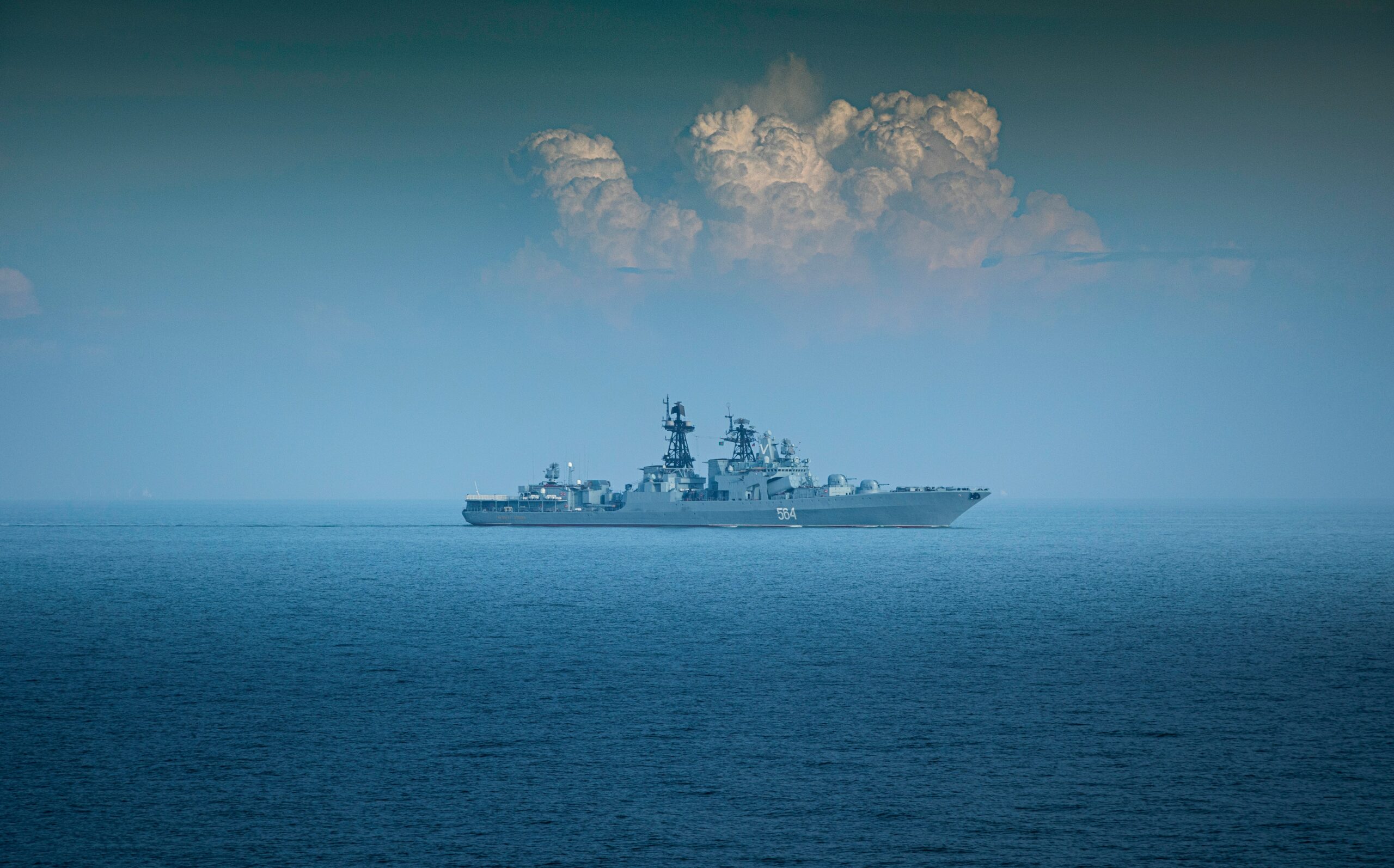
The Ukrainian attack on the Russian warship Merkuriy at Benghazi Naval Base in Libya on November 22 has once again exposed Moscow’s vulnerabilities. At the same time, Kyiv’s operation has clearly demonstrated that maintaining a Russian military presence in the North African nation could prove too costly.
Nearly five years into Russia’s full-scale invasion of Ukraine, Kyiv is now responding asymmetrically to Moscow’s actions by targeting Russian interests around the world. At first, however, Ukraine hesitated to openly acknowledge its involvement in attacks against Russia. Instead, following the destruction of the Crimean Bridge in 2022 and the strike on Saky Air Base in Crimea that same year, Ukrainian officials responded with sarcastic remarks.
But as Russia’s military limitations have become harder to ignore, Kyiv has become more willing to take credit for its operations against Russian targets, openly acknowledging and even celebrating them. The day after the Merkuriy – which Russian President Vladimir Putin in 2023 described as “a symbol of the growing strength of the Russian Navy” – was destroyed, Ukrainian President Volodymyr Zelenskyy described the attack as “an exemplary Ukrainian operation in response to Russia’s war.” He also stressed that, as a result of the Ukrainian drone strike off the Libyan coast, Russia lost a Ka-27 combat helicopter, as well as the dry cargo vessel MV Angara.
Although these losses are tolerable from a purely military perspective, what should worry Moscow more is the significant reputational damage it has suffered. This is particularly important, given Libya’s fragile political and security situation. The country remains divided between rival centers of power, with the Libyan National Army (LNA), commanded by Field Marshal Khalifa Haftar, controlling much of the east and south, while the UN-recognized Government of National Unity (GNU), based in Tripoli, governs the west with the support of various armed groups.
Should civil war erupt again in Libya, Russia, weakened by its war in Ukraine, would be unlikely to be in a position to support the LNA, led by the Kremlin’s ally, Haftar, in a confrontation with forces aligned with the GNU. More importantly, if Ukraine’s Security Service (SBU) can destroy Russian military assets thousands of miles from its borders with relative impunity, Moscow’s other allies in Africa and the Middle East may begin to question just how reliable a partner the Kremlin really is.
Indeed, having failed to defeat Ukraine – one of Europe’s poorest countries – after nearly five years of war, and being unable to safeguard its own military installations and equipment, both at home and abroad, Moscow’s ability to protect its allies and proxies remains questionable. The fall of the Kremlin’s client, Syria’s longtime president Bashar al-Assad, in December 2024 sent a clear signal to other actors who might be relying on Russia’s support. Africa is no exception.
Despite the perception that Moscow is easily replacing France in its former African colonies, the Kremlin is struggling to maintain its presence in several countries across the continent. Ironically, it is Ukraine, rather than any Western power, that is now creating some of the biggest headaches for Moscow in Africa.
In the Democratic Republic of the Congo, Russia has accused Ukraine of supporting the M23 armed group, which is fighting government forces in the country’s east. At the same time, Russia’s former Wagner mercenary network, whose African operations have largely been taken over by the Kremlin-controlled Africa Corps, has reportedly sought opportunities to establish a foothold in the conflict-torn country and expand Moscow’s influence. However, Kyiv’s alleged involvement could further complicate Russia’s ambitions in the region.
In Mali, where Russia has become the military junta’s main security partner, Ukraine is making life more difficult for Moscow by allegedly providing intelligence and specialized drone training to Tuareg separatists fighting the Malian army and its Russian allies. In Sudan, on the other side of the continent, the country’s military-led government has repeatedly accused Ukraine of providing direct military support, drone training and personnel to the paramilitary Rapid Support Forces (RSF).
Interestingly, Russia had sought to establish a naval base in Sudan, but the military coup in October 2021, followed by the outbreak of civil war in April 2023, put the Kremlin’s plans on hold. But even if Moscow had managed to achieve its goals and secure a military presence in the Northeast African country, the outcome would almost certainly have been the same as in Libya.
To reach any of its bases in the Mediterranean or a potential naval facility on the Red Sea, Russian warships would first have to pass through the Black Sea and then the Turkish-controlled Bosphorus and Dardanelles straits. Even if Turkey allowed them passage, they would remain vulnerable to Ukrainian drone attacks, both in the Black Sea and further along their route. Finally, even reaching their destination would not guarantee their safety, as the recent events in Libya have demonstrated.
An additional problem for Moscow is that it seems to have no effective way of responding to Kyiv’s attacks. Following the sinking of the Merkuriy and the destruction of other Russian military assets, Russia’s ambassador to Libya, Aydar Aganin, described Ukraine’s actions as “an attempt to expand the conflict into maritime areas far from the battlefield.” Apart from acknowledging the attacks, Aganin offered no explanation of how the Kremlin intends to protect its interests in Libya. Instead, he stressed that Moscow will “consider possible ways to respond to these incidents.”
In other words, nearly a year after Ukraine began targeting Russian-linked vessels in the Mediterranean, Moscow is still at the stage of considering how to respond. Such an approach could only embolden Kyiv to continue and potentially expand its campaign against Russian interests, not only in Libya but elsewhere.