Poland and the Arab Gulf states consider each other as essential partners. Their relations, particularly in the economic sphere, have strengthened significantly in recent years. However, the ongoing war is the primary factor determining the development of future business activities.
The war that escalated between the United States, Israel, and Iran on February 28 has led to the disruption of the regional order and left its actors in dismay. Despite diplomatic efforts undertaken by mediating Pakistan to end the war, there is still no concrete solution, and there are no indications that an anticipated peace and stability will take place in the near future. Tehran has recently offered a proposal to reopen the Strait of Hormuz, but postponed discussion on the issue of the nuclear program. The U.S. considers this topic vital to concluding any deal with Iran. In fact, the following events have led to volatility in the oil and gas market, causing prices to fluctuate and hydrocarbon stocks to gradually decline. If this situation persists in the long run, it will not serve the stability of Middle Eastern and foreign markets.
It is worth noting that despite the ongoing conflicts, the Gulf subregion has become an important actor on the international stage and currently plays a key role in global supply chains, encompassing strategic sectors such as artificial intelligence (AI), renewable energy, and defense. The number of foreign investors is steadily increasing, underscoring the potential of the Arab Gulf states. Poland, which in 2025 became the 20th largest economy globally, is also participating in those efforts. When observing the trajectory of Polish foreign policy, one can notice the dynamic development of relations with the Arab Gulf states in recent years. They take the form of bilateral cooperation and aim to strengthen their efforts in developing strategic sectors that are vital for participating parties. It is therefore worth reviewing the evolving cooperation between Poland and the Arab Gulf states, mainly the United Arab Emirates, Saudi Arabia, and Qatar.
Poland’s Perception of Security
Poland’s paramount interest, which has remained unchanged for many years, is to ensure national security. It represents a realistic approach to the contemporary threats and challenges that the Russian Federation poses to Europe, specifically to the Eastern flank. On February 26, Radosław Sikorski, Polish Deputy Prime Minister and Minister of Foreign Affairs, delivered an annual speech during which he discussed contemporary Polish foreign policy goals. The top diplomat highlighted that “NATO and the European Union are the two pillars of our [Poland’s] security and prosperity, both essential for the realization of the Polish raison d’état”. As Sikorski noted, a “united Europe is a pillar of the North Atlantic Alliance”. Given that the global political situation is highly uncertain and threatens the security of supply chains, Poland is also focusing on developing technological capabilities, which also aligns with the broader objectives centered on building a strong economy. According to the World Bank, in 2025, Poland’s GDP surpassed $1 trillion, making it the largest economy in Central Europe.
Although priority is given to Poland’s alliance with the United States and cooperation within the European Union and NATO, Mr. Radosław Sikorski also focuses on strategic partners in South America, Africa, and Asia. As emphasized by the top diplomat, “the Middle East remains a region of key importance. It is no longer just a reservoir of oil and gas – it is also experiencing rapidly growing investments in renewable energy and cutting-edge technologies enabling the development of artificial intelligence. We [Poland] see significant potential in these changes for the involvement of Polish companies, supported not only by active bilateral relations but also by the strengthening cooperation between the European Union and the Gulf Cooperation Council”. In terms of security and conflict resolution, Poland emphasizes diplomatic activities and the importance of peace and stability in the Middle East.
The Arab Gulf States in Poland’s Foreign Policy
Poland and the Gulf states have been steadily deepening their economic ties. Saudi Arabia is considered Poland’s largest economic partner in the region, followed by the United Arab Emirates and Qatar.
According to information provided by the Ministry of Foreign Affairs of the Republic of Poland, the main fields of cooperation with Riyadh encompass energy, tourism, agri-food and agriculture technology, education, and investments. Saudi Arabia remains one of the most important oil exporters to Poland.
Over the course of recent years, numerous meetings have taken place involving representatives of the Polish and Saudi governments and companies interested in business cooperation. For instance, in September 2025, an 80-member Saudi delegation visited Warsaw and attended the 2nd Polish-Saudi Investment Forum. In February 2026, approximately 70 companies from Poland accompanied the Minister of Finance and Economy, Mr. Andrzej Domański, who paid a business visit to Riyadh. The Polish Investment & Trade Agency, whose representatives were also present in the Kingdom, emphasized that the Polish delegation presented a proposal for potential cooperation and investments, covering sectorssuch as energy, ICT, fintech, AI, cybersecurity, food, agritech, and dual-use technologies. The delegation also participated in the Saudi-Polish Investment Forum, during which the respective representatives signed two memoranda of cooperationaimed at deepening economic ties.
Poland’s relations with the United Arab Emirates are also developing at a similar pace. Every year, numerous meetingsand events take place during which government representatives, local authorities, and business leaders discuss potential investments and initiatives to be jointly implemented. In 2018, the Polish Investment & Trade Agency opened a Foreign Trade Office whose activities are based on two pillars: promoting Poland as an investment destination and supporting both Polish businesses operating in the UAE and companies seeking to enter the Emirati market. In 2024, Poland established its Business Council in Dubai. To strengthen bilateral relations in the economic sphere, the Dubai Chambers Representative Office was opened in Warsaw in October 2025.
In February of the same year, a UAE delegation, led by Dr. Thani bin Ahmed Al Zeyoudi, Minister of State for Foreign Trade, paid an official visit. During talks with senior Polish government officials, the Emirati minister highlighted Poland’s strategic location, emphasizing that “manufacturing, renewable energy, and agriculture hold immense potential for collaboration, further advancing our shared vision for economic progress”.
When it comes to investments in Poland, the UAE is active in aviation, tourism, electronics, automotive, the food industry, science, and technology. In the Emirates, the main Polish investments are concentrated in the following sectors: real estate, technology, science, advanced technologies, and retail.
Cooperation with Qatar is also developing successfully. In July 2024, the 5th Polish-Qatari New Technologies Forum in Warsaw took place, in parallel with the official visit paid by the Emir of Qatar, Sheikh Tamim bin Hamad al-Thani. During the event, organized by the Polish Investment & Trade Agency, four agreements were signed in the shipbuilding, electrical engineering, and technology-park cooperation sectors. It should be mentioned that Qatar is among the top exporters of liquefied natural gas to Poland; however, due to the escalation of conflict in the Middle East and attacks on Qatari infrastructure, its deliveries have been suspended.
The aviation development stands out here. Poland and the Gulf are well connected by air routes. Since 2012 and 2013, two key airlines have been operating regular flights to Warsaw from Qatar and the UAE – Qatar Airways and Emirates. Over time, new low-cost carriers were added to the route offering: Flydubai and Air Arabia, departing from both Dubai and Sharjah. In June 2025, the range of connections between Poland and the UAE has been expanded with an additional carrier – Etihad Airways, based in Abu Dhabi. At the same time, Saudi Arabia opened a new route between Riyadh and Kraków, operated by Flynas.
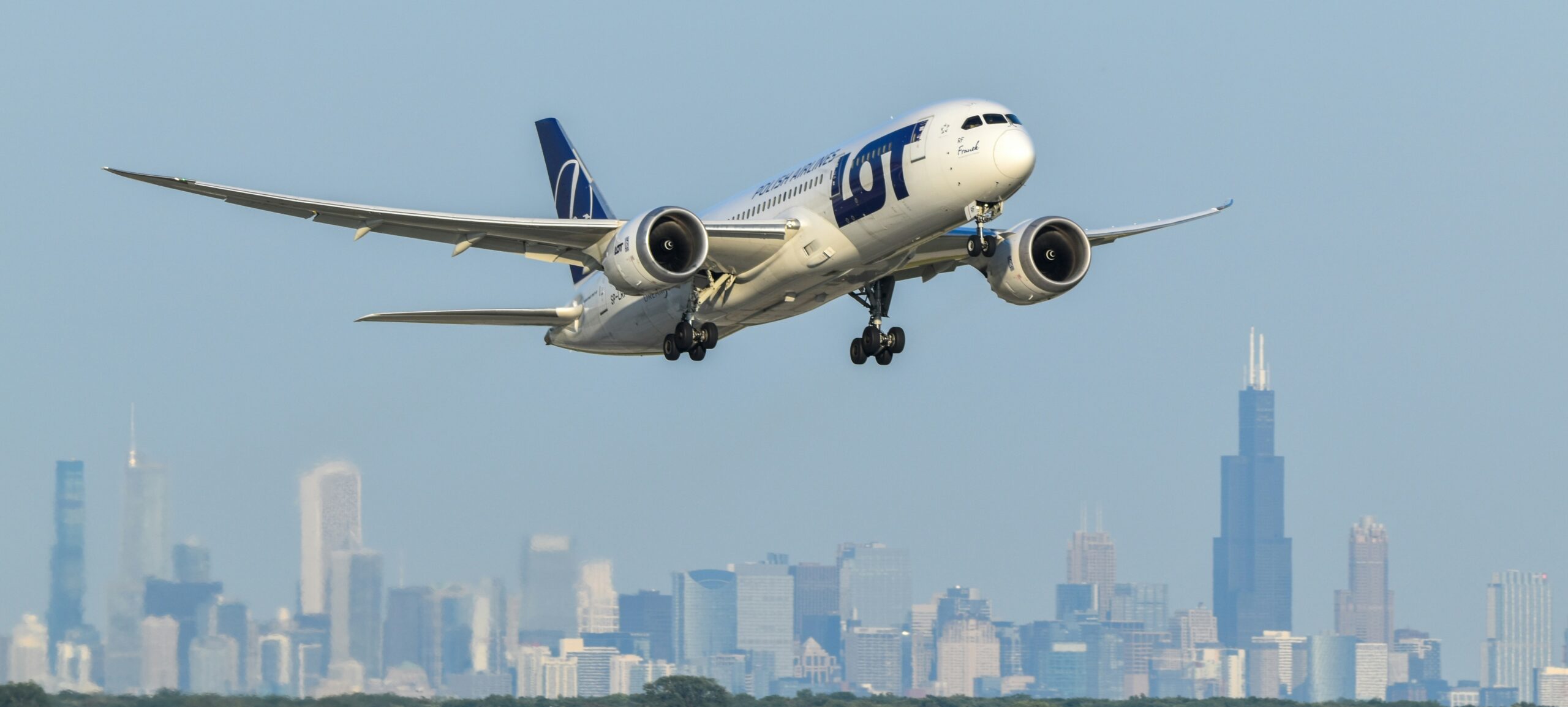
In September 2021, LOT, Polish Airlines, launched direct flights from Warsaw to Dubai. In June 2024, another Middle Eastern destination was inaugurated – a connection between the capital of Poland and Riyadh.
The Polish website WNP stated that the launch of numerous flights between Poland and the Gulf has led to increased interest from Arab tourists in visiting Polish cities. The southern region draws significant attention, particularly near the Tatra Mountains, namely Zakopane, as well as Kraków, to which direct flights also operate. In 2025, Arab News reported that most tourists came from the UAE, Saudi Arabia, and Kuwait.
Apart from the economic dimension, these countries also undertake initiatives in the cultural and scientific domains. Given that the political aspect is likewise present in the public sphere, it is also worth discussing it in relation to the Polish-Arab Gulf states’ ties. In late January 2026, Saudi Foreign Minister Prince Faisal bin Farhan Al Saud paid an official visit to Warsaw and met with Deputy Prime Minister and Foreign Minister Radosław Sikorski. The key moment of the visit was the signing of a memorandum of understanding aimed at establishing the Saudi-Polish Coordination Council, which provides a platform for developing cooperation in areas of mutual interest to both parties. In March, Mr. Radosław Sikorski met with his counterpart, the UAE Deputy Prime Minister and Minister of Foreign Affairs Sheikh Abdullah bin Zayed Al Nahyan, in the capital of Poland, and discussed Polish-UAE relations, including potential cooperation in particular economic sectors, and the contemporary situation in the Middle East.
Outlook
Although only a glimpse of bilateral relations between Poland and the Gulf states was presented, it is evident that these ties have deepened in recent years. Poland and the sheikhdoms have much to offer to each other, thanks to their rapidly developing strategic sectors. For instance, Poland’s domestic stability and central location in Europe are conducive to attracting foreign capital. Along with the growing interest of Arab Gulf states in the national technology industry, it further bolsters these opportunities.
It should be noted that the ongoing war in the region is disrupting the aviation and energy markets, where supplies of hydrocarbons cannot be delivered on time. Although it is currently impossible to foresee a precise scenario for the region, the local authorities take various actions that align with their national interests. One example of such a decision is the UAE’s withdrawal from OPEC, which will allow Abu Dhabi to decide on the country’s oil production quotas. The efforts of state policymakers in the Gulf to ensure appropriate investment conditions constitute a clear example of long-term planning. They also reassure their business partners that, despite the shocks occurring, the Gulf remains an attractive destination for capital inflow.
If, however, an escalation of military actions were to occur – something that none of the states desire – adverse effects on tourism, investment activity, and other areas of cooperation between the Gulf and its partners would be inevitable.