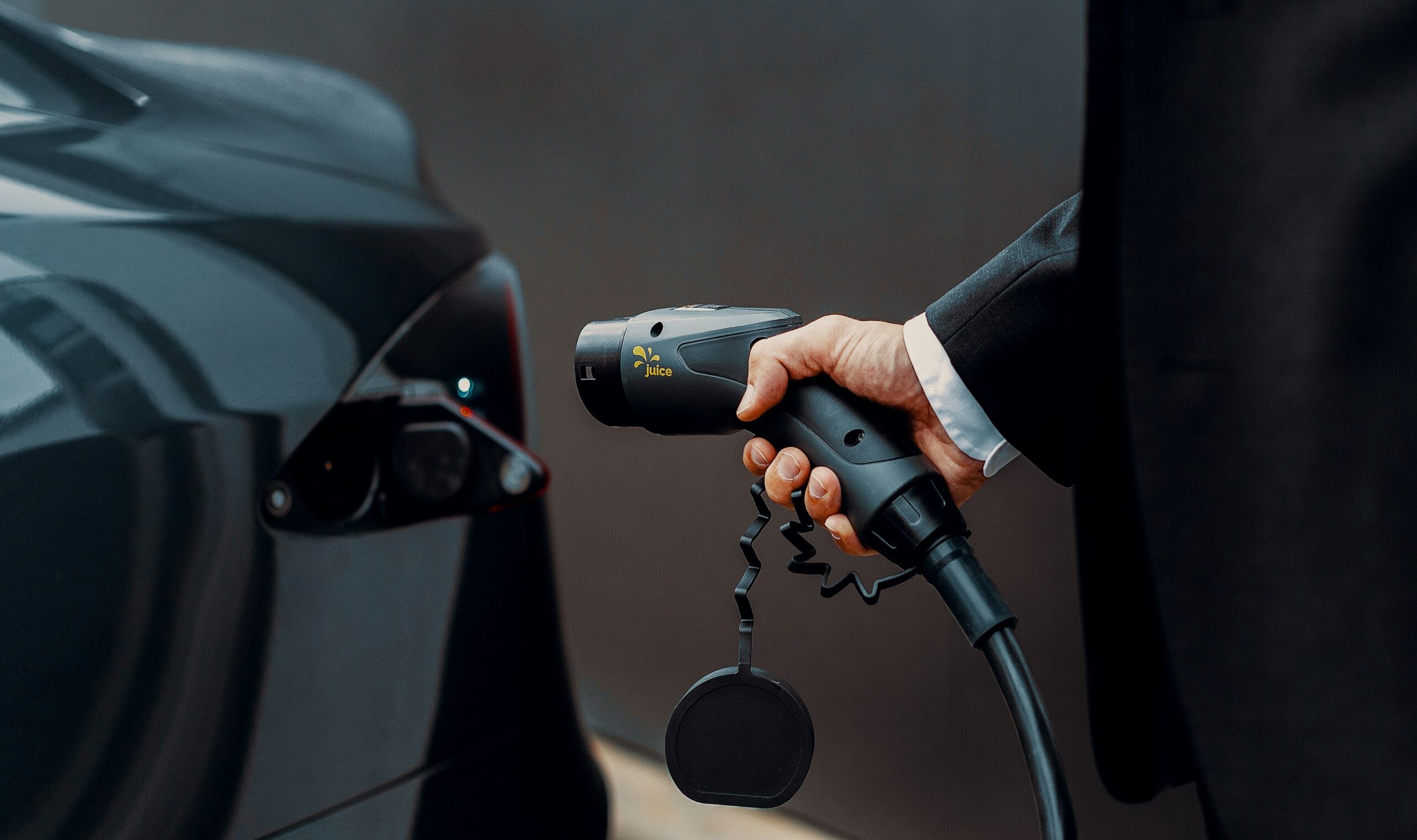
For decades, the automotive story of the Gulf has been written in petrol. Cheap fuel, long highways and a cultural preference for large SUVs made the region one of the least likely candidates for an early electric transition. That assumption no longer holds. According to Roland Berger’s EV Charging Index 2025, a survey-based study covering more than 12,000 respondents in 33 markets, the Gulf Cooperation Council has become one of the fastest-growing electric vehicle (EV) markets in the world, with the average EV sales penetration rate across the surveyed GCC countries doubling from roughly 2% to 4% within a single year [1] [2]. The wider MENA region followed suit: total EV sales across the region grew by around 50% in 2025, albeit from a low base [3].
Nowhere is this shift more visible – or better documented – than in the United Arab Emirates. The UAE is the GCC’s largest EV market by volume, it hosts the region’s densest charging networks, and, uniquely among Arab states, it can increasingly claim that the electricity flowing into those chargers is low-carbon, thanks to the Barakah nuclear plant and some of the world’s largest solar parks. This article examines three interlocking questions through the Emirati case: how far EV adoption has actually progressed, whether the charging infrastructure is keeping pace, and what energy sources ultimately power the transition. It closes with an assessment of future prospects for the UAE and the wider region.
From Niche to Momentum: EV Penetration in the UAE
The raw numbers remain modest by Chinese or Norwegian standards, but the trajectory is steep. In 2024, close to 24,000 battery-electric and plug-in hybrid vehicles were sold in the UAE, the highest volume in the GCC [2]. In 2025, EV sales grew by a further 26.4% and reached approximately 8% of all new vehicle sales in a total market of around 336,000 units – a market that itself expanded by 5.3% [4]. Industry trackers put the EV share at 8–8.5% of new sales for the year, second in the GCC and Levant region [5]. For comparison, PwC estimated the UAE’s EV share of new sales at just 3% as recently as 2024 [6].
Perhaps more telling than the sales figures is the behavior of existing owners. Roland Berger found that 91% of current GCC battery-EV owners intend to buy another EV – above the global average of 87% – and in the UAE that figure rises to 94%, a repurchase intention second only to China worldwide [2]. Nearly half of Gulf EV owners drive their cars daily, and a third exceed 20,000 kilometers per year, usage patterns comparable to mature EV markets such as Norway and Germany [2]. The electric car in the Emirates has, in other words, ceased to be an experiment and become a daily commuter vehicle.
Dubai illustrates the fleet-level dynamics. The emirate closed 2025 with 47,944 registered electric vehicles, an increase of 27.9% year-on-year, while Abu Dhabi reported more than 15,000 EVs in the first quarter of 2025, up 60% from a year earlier [7]. To put the speed of change in perspective, the number of EV owners registered under Dubai’s Green Charger initiative stood at barely 11,000 in mid-2023 [6]
Brands and Consumer Trends: Tesla’s Lead, China’s Charge
The brand landscape is changing almost as quickly as the volumes. Tesla remained the UAE’s dominant EV brand in 2025 with roughly 36% of electric vehicle sales, and the Model Y broke into the top ten best-selling models of any powertrain – a symbolic milestone in a ranking traditionally monopolized by the Nissan Patrol, Toyota Land Cruiser and other large SUVs [4]. But the most dynamic player is BYD, whose UAE sales rose by 212% in 2025, propelling it into fifth place among EV brands [4]. Market monitors reported that by early 2026, BYD had overtaken Tesla to claim the top spot in the Emirati EV segment, mirroring its global overtaking of Tesla in battery-electric deliveries in 2025 [5]. The UAE now ranks among the top ten global destinations for Chinese EV exports [8].
The second-hand market tells a similar story of normalization. The UAE’s pre-owned EV market surged by 41% in 2025, with the Tesla Model 3 and Model Y the most sought-after used models, but with growing buyer interest in Chinese brands such as BYD, Zeekr, Avatr and even Xiaomi – a sign that residual-value anxiety, long a brake on EV purchases, is easing [9]. Chinese manufacturers combine competitive pricing with lithium-iron-phosphate battery chemistry, whose superior thermal stability is a genuine selling point in a country where a parked car’s interior can reach 70°C in summer [10].
Charging Infrastructure: A Federal Push Meets Emirate-Level Ambition
Charging anxiety has consistently ranked as the main obstacle to EV adoption globally, and the UAE has attacked the problem from several directions at once. At the federal level, the government established UAEV, a joint venture between the Ministry of Energy and Infrastructure and Etihad Water and Electricity, as the country’s first state-owned charging network. UAEV grew from 122 operational charging ports in April 2025 to a planned 300 by the end of that year, with a stated goal of more than 1,000 high-speed DC chargers nationwide by 2030, deliberately prioritizing the historically underserved Northern Emirates [7] [11] [12].
January 2025 also brought a structural reform that market observers regard as a maturity milestone: the end of the free-charging era and the introduction of standardized national tariffs – AED 1.2 per kWh (plus VAT) for DC fast charging and AED 0.70 per kWh for AC charging [11]. Transparent, regulated pricing has removed a key uncertainty for private investors in charging assets. A further regulatory layer, Cabinet Resolution No. 175 of 2025 on electric vehicle supply equipment, brings a unified national technical standard for chargers into force in May 2026 [7].
The individual emirates are racing ahead of the federal baseline. Dubai’s utility DEWA expanded its Green Charger network from 370 public charging points in 2023 to more than 1,860 by the end of 2025 [6] [7]. Abu Dhabi launched the “Charge AD” program with a first phase of 1,000 charging stations across 400 locations, complementing E2GO – the ADNOC-TAQA commercial charging venture – which had over 400 charge points installed by the end of 2025 and targets 750 by 2028 [7] [12]. Consumer experience appears to validate the build-out: charging-satisfaction scores in the GCC are among the highest measured anywhere, at 95% in the UAE, 97% in Qatar, and 94% in Saudi Arabia [2].
The Power Behind the Plug: What Actually Charges the Cars?
An electric vehicle is only as clean as the grid that feeds it, and here the UAE occupies a distinctive position in the region. Total power generation reached a record 164 TWh in 2024, of which 40 TWh – roughly a quarter – came from the four-reactor, 5.6 GW Barakah nuclear plant, which reached full commercial operation in September 2024 as the first nuclear power station in the Arab world [13] [14]. Solar power contributed a further 14–15 TWh, around 9% of generation, anchored by mega-projects such as the Mohammed bin Rashid Al Maktoum Solar Park in Dubai and the 2 GW Al Dhafra plant in Abu Dhabi [14]. Natural gas still supplies roughly 70% of electricity, but the fossil share of the mix has fallen from about 95% only five years ago [15] [16].
The direction of travel is codified in the updated UAE Energy Strategy 2050, which targets a 32% clean-energy share by 2030 and eliminates coal from the mix entirely [15]. The International Energy Agency projects solar generation in the country to grow by an average of 23% annually between 2025 and 2027, with Dubai’s solar park alone expected to reach 4.7 GW by 2026 [14]. Emirates NBD Research estimates that Barakah’s output avoids some 22.4 million tonnes of CO₂ annually – the equivalent of removing 4.8 million cars from the road [16]. For EV drivers, the practical consequence is that roughly a third of every charge is already carbon-free, a share set to rise steadily; this materially strengthens the environmental case for electrification compared with EV markets that still run largely on coal-fired grids.
Future Prospects: Targets, Obstacles and Regional Spillover
Official ambition is not in short supply. The UAE’s National Electric Vehicles Policy aims for EVs to make up 50% of vehicles on the road by 2050, with an interim goal of roughly 10% of the fleet and 30% of new vehicles by 2030 [17]. Independent forecasts are somewhat more conservative but still bullish: PwC projects EVs to exceed 15% of new passenger-car and light-commercial sales by 2030 (around 58,000 vehicles) and 25% by 2035 (around 110,500 vehicles) [6] [18].
Real obstacles remain. Upfront prices remain high: mainstream EV models typically cost AED 150,000–250,000, well above the average car purchase in the country, and insurance premiums for EVs have run substantially higher than those for comparable petrol cars [19]. Model availability is another constraint – battery-electric vehicles made up only about 7% of the models offered by UAE dealers in 2024, against 26% in Europe – though the rapid arrival of Chinese brands is closing this gap faster than analysts expected [18]. Finally, roughly 88% of residents are expatriates, many living in apartments without access to private home charging, which makes the continued expansion of the public network a precondition rather than a convenience.
The Emirati experience is already radiating outward. Saudi Arabia recorded a near-tenfold jump in EV sales in 2024 to over 11,000 units, and is building a national fast-charging company, EVIQ, backed by the Public Investment Fund, targeting 5,000 chargers across 1,000 locations by 2030, while nurturing domestic manufacturing through Lucid and the national champion Ceer [2] [17]. Qatar surpassed 300 public charge points in August 2025 [1]. Elsewhere in MENA, Turkey – propelled by its domestic brand Togg alongside Tesla and BYD – was the region’s most dynamic EV market in 2025 [3]. The Gulf, long a symbol of the hydrocarbon age, is quietly assembling the region’s template for what comes after it.
Conclusion
The UAE’s electric-vehicle transition has passed its proof-of-concept phase. Adoption has moved from low single digits to around 8% of new sales in two years; charging infrastructure has grown ahead of demand under a clear federal-plus-emirate governance model with regulated tariffs; and a quarter of the electricity behind the plug is already nuclear, with solar expanding at over 20% a year. None of this makes the UAE an electric economy yet – SUVs and petrol still dominate its roads, and gas still dominates its grid. But the combination of state capacity, consumer satisfaction and increasingly affordable Chinese supply suggests that the question for the Emirates is no longer whether the EV transition will happen, but how quickly its neighbors will follow.