The current US administration should consider rethinking its Middle East strategy towards a more diplomatic approach.
It has been nearly two months since the situation in the Middle East reached a critical point. There was an exchange of fire between Iran and Israel, culminating in a missile attack on a US airbase in Qatar. Although the conflict did not escalate further, the regional order was de facto disrupted, leaving the future of the region uncertain. The Gulf states, despite tensions and the risk of a large-scale war, have not changed their attitude towards Iran. Dialogue between Iranian and Gulf decision-makers continues – proof that diplomacy remains a necessary and relevant tool in forging bilateral ties.
We cannot speak of a return to balance after all. All eyes are on the Gaza Strip, where the people, particularly infants, are suffering from hunger and lack of access to essential supplies. The Iranian nuclear program and its future also attract attention for the challenges it poses to the region’s stability. The Iranian authorities, in their rhetoric, emphasize their will to continue developing the nuclear program. As reported by Al-Jazeera, President Donald Trump has recently responded to the statement and announced that he might launch another attack if the authorities in Tehran decide not to abandon their ambitions to enrich uranium. This constitutes another example of a hawkish stance marked by a firm US foreign policy. It would not be an overstatement to express that the situation in the region resembles a sine wave – there are moments of silence, and then there is a sudden eruption of conflict.
The United States is asserting its regional dominance not only through military means. This is well illustrated by economic cooperation and investments worth hundreds of millions of dollars. An opportunity to deepen relations in this area was Donald Trump’s visit to Saudi Arabia, Qatar, and the United Arab Emirates on May 13-16, 2025. It was a crucial moment for marking the US presence in the Gulf. The meeting agenda included key matters, with billions in investments attracting significant attention. Trump’s visit emphasized that, regardless of regional or international developments, the Gulf continues to be a top priority for the US. Moreover, the Gulf has emerged as the focal point of regional diplomacy, where key decisions and processes are discussed. It can be stated that President Trump seems to be reshaping the Middle Eastern order, but the outcome can lead to either meaningful progress or prove detrimental. Two questions still arise:
-
- Will Donald Trump finally accomplish what seems to be currently impossible to achieve, that is, peace?
- What kind of regional order will be shaped after all?
Trump’s Visit to the Gulf Confirmed Its Importance in US Policy
Saudi Arabia has once again become the first destination of Trump’s visit, as it happened in 2017 after his first election. During the visit to Riyadh, the US sealed a number of deals with the Kingdom that were later outlined in a fact sheet by the White House. Saudi Arabia pledged to invest $600 billion in the US in the following sectors: defense industry, energy security, technology leadership, access to global infrastructure, and minerals. The Saudis expressed their willingness to purchase weapons from the Americans worth $142 billion. As stated, the largest defense cooperation deal in U.S. history is a clear demonstration of the US’s commitment to strengthening its partnership with the Kingdom.
On May 13-14, two key events took place: the Gulf Cooperation Council-United States Summit, which gathered representatives of the Gulf states, and the US-Saudi investment forum. The President of Syria, Ahmad al-Sharaa, visited Riyadh, meeting with the US head of state. President Trump also announced that he would lift sanctions on Syria, opening a new way towards integrating Syria into the regional system.
Trump’s visit to Qatar also included discussions and agreements on economic matters. According to the White House, both states are expected to generate $1.2 trillion of economic exchange. Qatar signed a deal to purchase Boeing 787 Dreamliner and 777X aircraft, totaling $96 billion. Agreements were also concluded in the field of defense, securing the acquisition of counter-drone capabilities and MQ-9B unmanned aerial vehicles.
The UAE was the last stop of Trump’s visit to the Gulf. Their cooperation in the AI sector has been established under the “US-UAE AI Acceleration Partnership” framework, with the UAE’s commitment to invest $1.4 trillion over the next 10 years in America. Donald Trump, during the UAE-US Business Forum, stated that the cooperation in this field would “generate billions and billions of dollars in business and accelerate the UAE’s plans to become a really major player in artificial intelligence”. In the context of aviation, the Abu Dhabi-based air carrier, Etihad Airways, would purchase 28 Boeing aircraft, B777X and B787 Dreamliner, worth $14.5 billion. Both parties also agreed to invest over $440 billion in the US energy sector within the next ten years.
Without Security, Nothing can be Achieved
In July, a separate meeting took place between the American President and the Crown Prince of Bahrain, Salman bin Hamad Al Khalifa, who pledged to invest an additional $17 billion in the United States, including the aviation sector. The US is an important partner for Manama for its military foothold in the sheikhdom. Defense, economy, and the artificial intelligence sector are the primary fields that collectively shape US-Gulf relations. This, in turn, confirms the assumption that the Gulf holds a priority place in US foreign policy.
Trump’s administration has yet to face numerous challenges. However, the involved parties cannot address these issues on their own. The Middle Eastern regional order is currently undergoing massive shifts, the results of which remain uncertain. Several regional powers have emerged, such as in the Gulf, with the presence of the United States, the hitherto most influential country. Sometimes, less predictable situations arise, leading to concerns and a violation of trust. While force and assertiveness can be decisive in resolving conflicts, they can also be destructive.
What is now crucial is the need to begin talks with regional leaders on security. The situation in the Gaza Strip requires an immediate solution and more assertiveness from the US side, since, without any moves forward, it will not be feasible to achieve stability and peace. The Arab states, such as the United Arab Emirates and Jordan, continue their efforts in providing the Gaza Strip with humanitarian aid by distributing essential supplies by air.
Another question is the future of the Iranian nuclear program. The Gulf leaders have not severed relations with Tehran; on the contrary, dialogue is still ongoing. This reflects the Arab decision-makers’ perceptions that isolating Iran would not be beneficial for the future of the region, especially in a situation where the US’s foreign policy could be erratic. Also, it is yet another example that these countries could become mediators in this situation and help to ease tensions between Washington and Tehran.
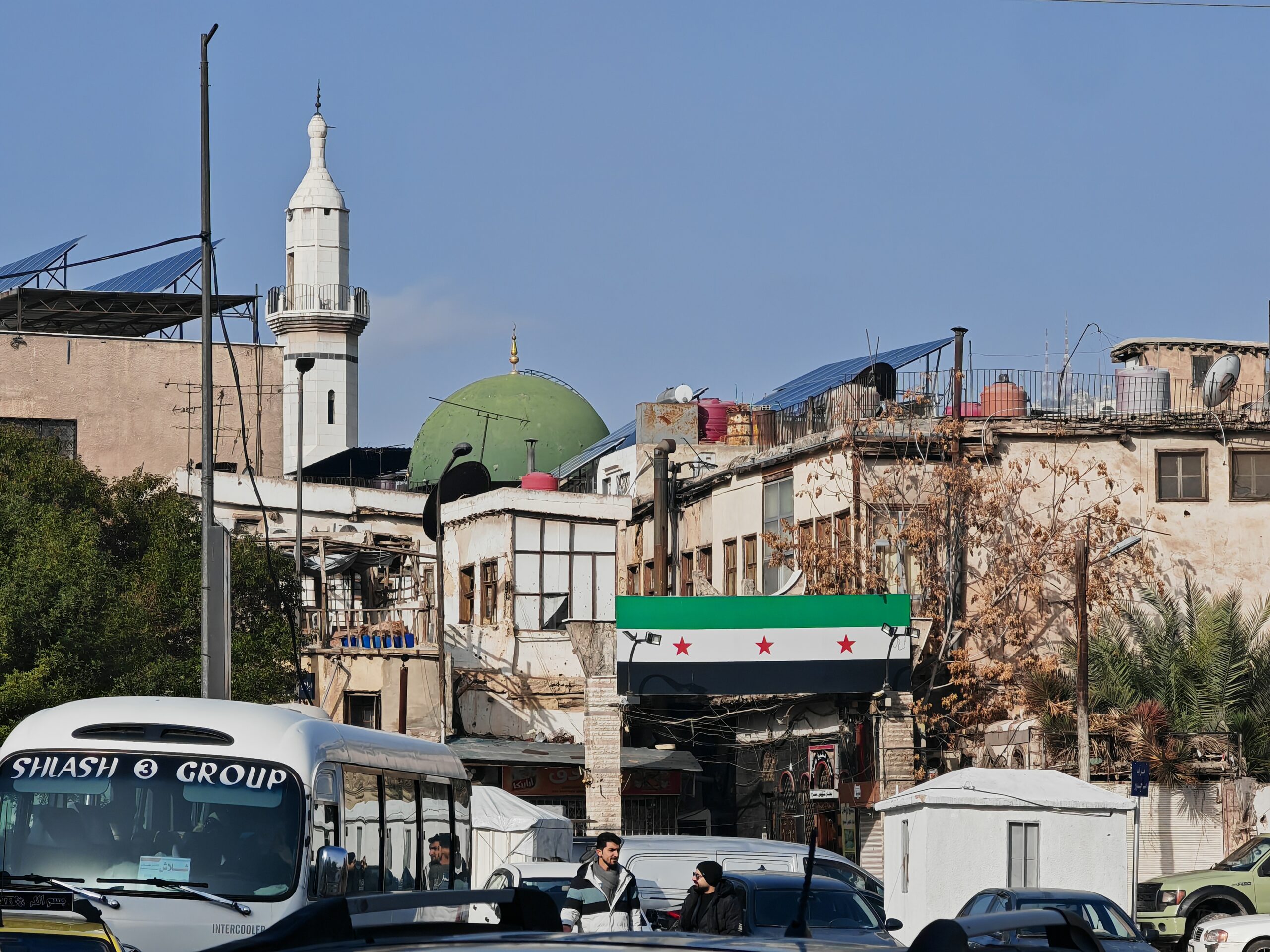
Regarding Syria’s reintegration into regional dynamics, it remains to be seen how the situation under President Ahmad Al-Sharaa’s leadership evolves. The US has already announced lifting sanctions on Syria, which, in consequence, offers a wide range of opportunities for foreign investors to allocate their capital in the country. Saudi Arabia and the UAE, two regional middle powers, expressed their interest in rebuilding Syria’s infrastructure, real estate, and ports destroyed during the civil war. Riyadh and Abu Dhabi are reported to allocate $6.4 billion and $800 million, respectively.
To answer the questions posed in the introduction, time, diplomacy, and consistency are required to bring stability to the region, particularly by the US. To achieve that, all regional leaders should gather and work on these solutions jointly, with the US presence. However, with the hawkish approach that the US administration has adopted, it may not necessarily bring the expected results, such as peace and stability.