On 5-6 December 2025, Khayrion hosted its second annual conference at Budapest’s prestigious Ludovika Akadémia, home to Hungary’s University of Public Service, co-host of the event, to discuss the impact of what – befittingly – was named „MENA dis/order”, referring to the „Panta Rhei” conditions we observe in the region.
It has been a tumultuous year indeed since Khayrion, the first pan-Central European think tank specialized in the Middle East, held its first annual conference upstream of the Blue Danube in nearby Bratislava. All that transpired in the MENA since then was on the conference agenda as our 30+ researchers and contributors from Europe and the MENA discussed the topics most relevant to Eastern Europe – from the vantage point of our region.
The two-day event kicked off with a keynote address by James M. Dorsey, a leading authority on everything called ME politics, thereby establishing a tradition… as James opened the first foundational Khayrion conference last year! His analysis of where we are now and where we are headed in the Middle East was brilliant but hardly reassuring, and set the tone for a lively conference rife with productive, sometimes heated debate…but nothing physical.
Paying homage to the Old Continent, the first panel delved into how Europe could salvage its eroded standing in the Middle East, having just been relegated to Item No. 4 on the US agenda of global importance. Not all is lost, though, for Europe in the ME, as attested to by the trade figures, says Fabio Coriolano, György Busztin, and Jakub Horváth, proving that the continent still holds attraction for the Middle East. Reza Abbasi delved into the underworld of intelligence agencies to show how they shape MENA’s foreign policy using or abusing international law. Omid Hedayati scrutinized the EU’s dual role as the snapback – what else? – snapped back on Iran with JCPOA going down, for now.
Surfing into the second panel, the conference debated how culture, norms, and society shape foreign policy in today’s MENA – with Aida Abd El Rehim opening the dialogue, sharing her fresh impressions of the opening of Egypt’s grand new museum of the Pharaonic Age, a global attraction and fresh fodder for Egypt’s foreign policy. Meanwhile, Egypt is still in the throes of contested change as religious laws continue to guide social values, says Márta Wollner. Not for all Egyptians, though, says Engy Ibrahim, presenting a lively panneau of the Coptic diaspora connecting Egypt and the wider world.
Panel Three went even further, exploring the role of Islamism in governance, security, and diplomacy – with Lenka Hrabalová presenting a gripping account of her observations in – guess where? – Afghanistan’s Wakhan Corridor, of all places, even testing for the Taliban. Jutting into China from Afghanistan, the Corridor is a headache for Beijing, with cannabis replacing the old-school opium of yore. Good reason for Virág Novák-Varró to delve into what she terms „the Taliban’s diplomatic games” as reflected in regional cooperation vs. hostilities. Talking about borders, Hessam Habibi–Doroh provides a refreshingly new perspective on border governance in the restive Sistan and Baluchistan province of Iran, a permanent headache for Tehran. Still talking about borders, Miklós Sárközy enlightened the participants about current affairs in Tajikistan and their impact on the country’s neighborhood. Harking back to classical Oriental Studies, Jeremi Chelis explored how the Futuh concept permeated modern fundamentalist thought.
Back to our times, Panel four analyzed the geopolitics of the MENA in the New World Order, as we attempt to understand it. Erzsébet N. Rózsa reviewed old–new security issues in the Gulf, of which there are plenty, she summed up. Analyzing the UAE in a multipolar world order, Aleksandra Ryś took a critical look at the Emirates’ strategic partnership with Russia, concluding that the latter has little of value to offer. Focus still on the Emirates: Bartosz Kurowski followed the evolution of Federalist Thought at the root of the UAE, from Pan-Arabism to pragmatism. Hanga Laczkó took a deep breath to describe Vision 2030 of Saudi Arabia, which she aptly named “transition in every dimension”.
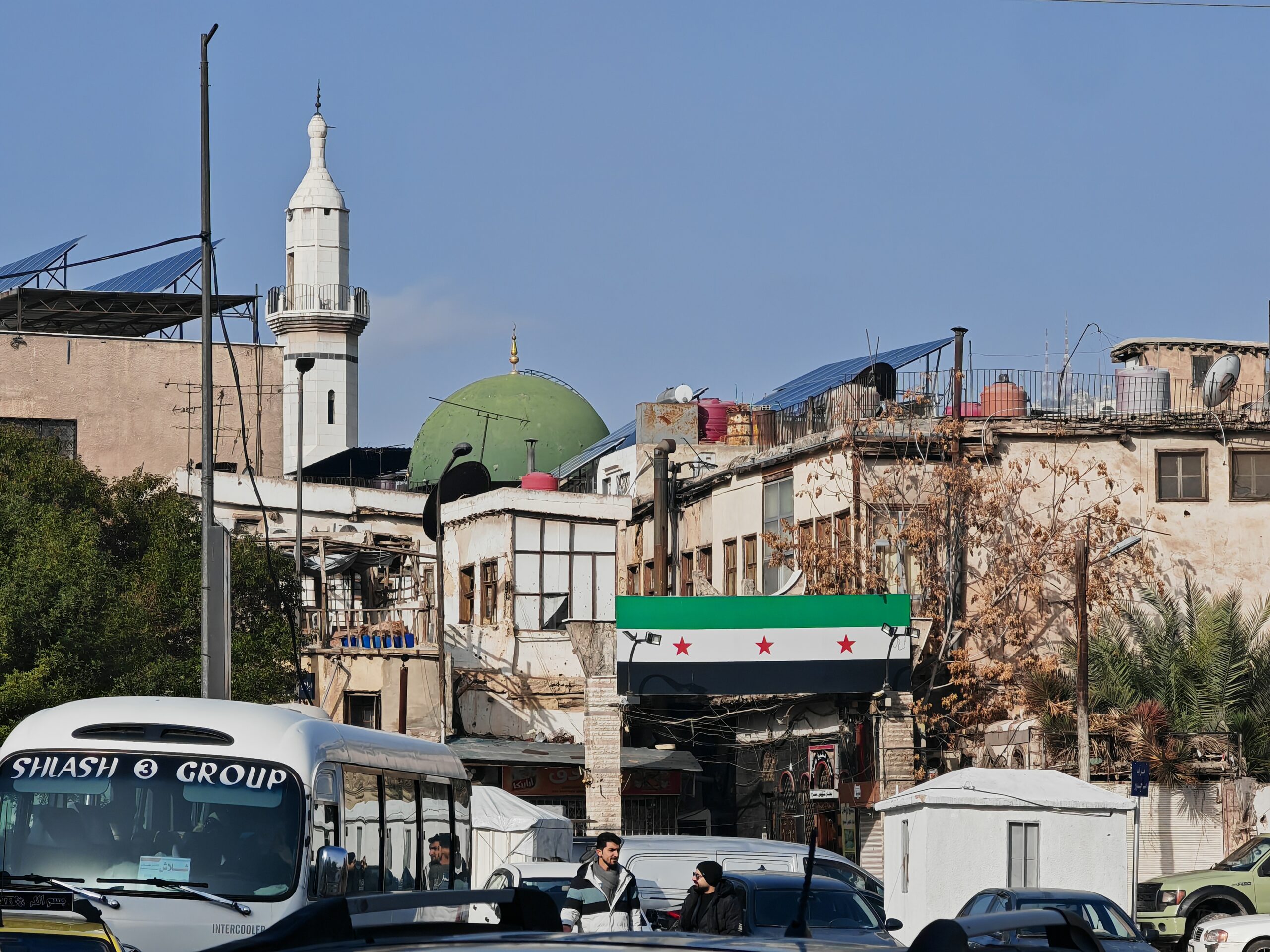
Day 2 opened with Syria at center stage.
Looking at „Syria a year on”, Panel five’s first speakers, Elias Dahrouge and Ján Ostrolucký analyzed new drivers of Syrian displacement dynamics in Lebanon. Lina Ghotouk, meanwhile, focused on the particularly vulnerable group of women refugees-turned-returnees heading back to Syria and their prospects there. Further elaborating on the topic, Marta Woźniak-Bobińska provided insight into the Syrian women’s political movement, post-Assad. Diaa Bara talked about the role of the UNDP in Syrian reconstruction, a contributor denied the prominence it deserves.
With the topic still Syria, in Panel six, Baraa Othman offered a sobering review of the difficulties and constraints Syrian journalism still has to contend with in the post-Assad landscape. Milan Rokos discussed a rarely mentioned segment of Syria’s foreign trade relationship: Czech-Syrian business relations, prominent before the civil war but now reviving. Omar Sayfo broached a topic of particular significance, analyzing rebel governance, education, and nation-building in Northwest Syria before 2025, while Wladimir van Wilgenburg elaborated on the position of the SDF after the fall of the Assad regime. Jacek Małecki closed the Syrian deliberations with his sweeping panorama of the regional struggle on the heels of the Syrian civil war.
The conference could not have adjourned without reference to Israel–Palestine. Panel seven did just that. In a highly informative lecture, Marek Čejka analyzed Jewish religious anti-Zionism in the current conflict. Reema Saleh, meanwhile, described the economic impact of the war on the everyday life of Gazans. In a drawdawn to two days of discussions, the last lectures examined some prominent rising challenges: Sabine Hoffman discussed the residue of the Gaza conflict in mainstream Israeli and Israeli-Palestinian society; Sára Kmeczkó talked about the border security challenges of the Maghreb, while Yasmine Barka detailed the fallout of UNSC 2797 on the Western Sahara and how it shapes Morocco’s standing in its regional environment.
The Conference ended with all those attending two days older but ostensibly much wiser. Researchers from Central Europe and the MENA – those with links to our region – seldom have the opportunity to meet and engage in live discussion. Central European peoples, for reasons rooted in their history, where great power competition pitted them against each other with hegemons over their heads, share a sympathy with the peoples of the MENA region, who likewise had little say in shaping their future. Central Europe should now be a catalyst for new thinking that informs the current effort to bring Europe and the MENA region closer together in a multipolar world, for their common benefit. Khayrion’s contribution through its Second Annual Conference aims at no less.
Image credit: Mészáros Márk Benjámin, Ludovika University of Public Service