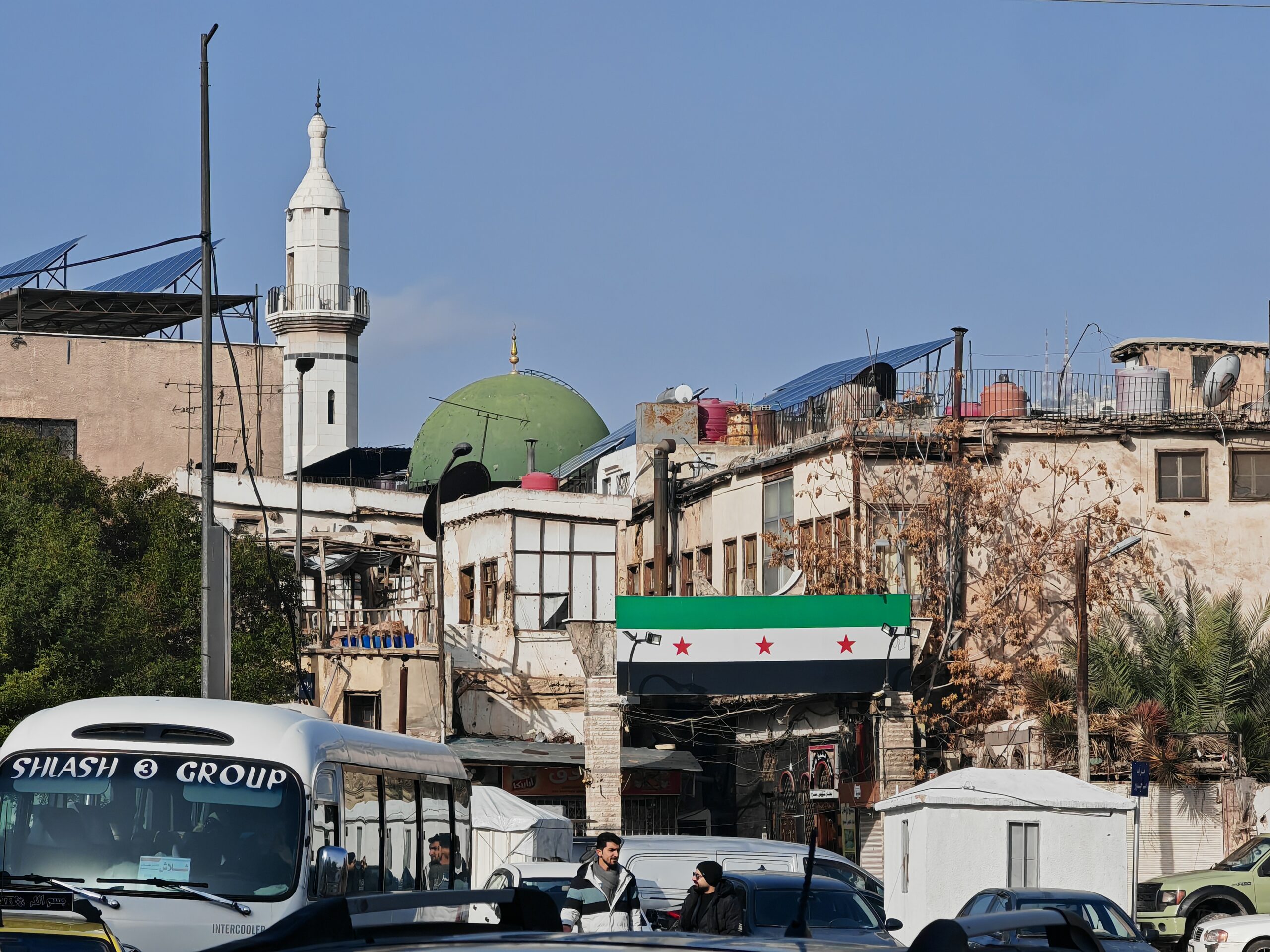
The reconstruction of post-war Syria will, according to conservative World Bank estimates, cost 216 billion USD. If modernization is considered, the amount could reach 300 billion, or even 1 trillion. This figure primarily covers infrastructure and housing repairs.
The Czech Republic is among the countries that aspire to take part in the reconstruction. It can build on its historical legacy—Czechoslovak engineers constructed what were then modern facilities in the 1970s, including the Homs refinery, a bottling plant in Damascus, a rubber factory in Hama, a brewery in Tartus, and other projects.
Current trade between the two countries, however, is negligible. In 2023, Czech exports to Syria amounted to 3.6 million USD, with dairy products accounting for the largest share.
In recent months, delegations of Czech companies and ministry officials have been travelling to Damascus and other cities. They have already been received, for example, by the Syrian ministers of economy and energy. A visit by the President of the Czech Chamber of Commerce is planned for February.
The Czech Embassy warns companies that all communication should go through it—various intermediaries have attempted to become involved in recent months, some of whom reportedly had ties to the Assad regime, which appears unacceptable to the Syrian side.
The main focus is the refinery in Homs. According to a Czech diplomatic source, it currently produces 130,000 barrels of oil per day, roughly 15–20 percent of its former capacity. The Syrian government has already decided to build a new refinery, to be located approximately 50 kilometers from the original one. According to Youssef Qablawi, the Director General of the Syrian Petroleum Company, the new facility should meet domestic demand and also account for exports. A chemical plant producing plastics and fertilizers is expected to be connected to it.
However, the Czech Republic is no longer able to build or even design such a new refinery. However, reconstruction of the existing facility is not entirely off the table, says Jiří Kovář of the company Unis. “We are receiving requests to at least carry out partial work to keep it operational, because they won’t have the funds for a new refinery.” A new refinery would cost several billion euros; reconstruction would require hundreds of millions.
According to a source within Czech diplomacy, discussions now concern not repairs or technological upgrades to the refinery, but securing a stable electricity source with the possibility of feeding surplus energy into the grid. For this reason, the refinery’s technical manager will visit Prague in January.
Unis is negotiating with a company that could enter the project as an equity partner and provide financing. For Czech firms, acting as investors is not an option; instead, they would serve as subcontractors within a consortium. Besides the Homs refinery, opportunities may also exist at the refinery in Baniyas. Although it was built by Romanians, it contains components originating from Czechoslovakia.
Kovář adds that Czech companies have no chance in projects that attract American interest. They have failed to win such tenders in the past, both in Kuwait and Iraq.
A major problem remains financing, which the Syrian side currently lacks. In 2023, the company Cheteng began repairing one of the turbines in Homs, but after invoices went unpaid, its specialists returned home, and the contract was suspended.
Czech diplomats and businesspeople hope that payments could be covered by a third party, particularly the Gulf States. A consortium of four companies has so far been formed under the umbrella of the Czech-Syrian Association for Industry. The consortium is capable of offering production capacities in the petrochemical sector.
At present, the inflow of investments is more declaratory than real, as even major investors (Qatar, Saudi Arabia, Turkey) are still waiting to see whether the domestic political and security situation remains stable. However, in late 2025 and early 2026, Saudi Arabia made a large donation of police vehicles to local security forces, significantly enhancing their capabilities and image in the public’s eyes. A potentially interesting opportunity for Czech entities could be the construction of an Oncology Center in the north of the country, a project the Czech Ministry of Health has shown interest in. Currently, options for its financing are being examined.
There are also opportunities in the water sector—representatives of three Czech water-management companies visited Syria in November 2025. So far, cooperation has mostly taken the form of development aid. Czech experts are rehabilitating existing wells and improving access to drinking water for tens of thousands of people.
The business potential is enormous, and the latest statements by President Donald Trump toward Syrian leader Ahmad Shara offer hope for future stability in this war-devastated country.
Image Credit: Marek Čejka