Since late June, there has been an uptick in assassination attacks by Iranian Kurdish opposition proxy groups inside Iran. Most of the attacks targeted Kurds working with the Islamic Revolutionary Guard Corps (IRGC), also known in Kurdish as ‘jash’ (the Kurdish word for collaborator). These attacks were mostly not officially claimed by Iranian Kurdish opposition parties. At least seven to eight Kurds working with the IRGC were killed in the attacks.
This comes as UN experts in August warned of an increase in ill-treatment and executions of Kurdish and Baluchi minorities in Iran. In 2026 alone, at least 24 members of the Baluch minority and 22 members of the Kurdish minority have been executed, and many more are at imminent risk of execution, UN experts said.
“What we are seeing is a growing backlash against the Islamic Republic’s systematic repression of the Kurdish people,” Hejar Berenji, the U.S. Representative of the Kurdistan Democratic Party of Iran (PDKI), told Khayrion. “But these incidents cannot be separated from the regime’s executions, arrests, torture, militarization of Iranian Kurdistan, and repeated attacks on Kurdish camps, families, and civilian areas in the Kurdistan Region, even though Kurdish forces did not enter the recent U.S.-Israel war with Iran.”
“When a regime closes every peaceful avenue and relies on humiliation and violence, it inevitably creates anger and resistance. The source of this escalation is Tehran’s policy of repression, not the existence of Kurdish political demands,” he added.
For instance, on August 5, Omar Dehqan, a Kurd who had ties with the IRGC, was killed in an armed attack in Gagesh Sofla village, Mahabad County, reported Hengaw. An organization known as Xori Hiva (Sun of Hope), which was established in June, claimed responsibility for the attack. Later, the armed wing of the Kurdistan Free Life Party (PJAK) claimed responsibility for the same attack, accusing Dehqan of working for the IRGC and being involved in the killing of four PJAK fighters in an IRGC ambush on June 28.
Hengaw reported similar incidents of Kurds working with the IRGC being killed by unknown groups. For instance, Salar Rangamiz was killed on August 8, 2026, in Sanandaj; Mohammadali Rahimzadeh was killed in Sarpir village, Sarvabad County on August 6; Karim Basi was killed on July 30, 2026 in Khwajamir village, Baneh County, and on June 29, Khaled Khaledi and Borhan Karisani were killed in the Mirabad neighborhood of Paveh. Furthermore, an attack by the Xori Hiva group in Piranshahr allegedly killed a member of the IRGC on June 26.
Read More: A New Kurdish Offensive in Iran?
The assassination campaign follows increased clashes between Iranian security forces and Iranian Kurdish opposition groups in July, in which at least 16 people were killed, including 10 Kurdish fighters of Iranian Kurdish opposition parties. Also on August 2, a PJAK-linked group attacked a checkpoint near Marivan with drones and RPGs, killing one conscript, reportedly in retaliation for the July 26 killing of Kurdish photographer Mehdi Tavakoli and his mother and sister by Iranian security forces.
“The increase in assassinations appears to be largely targeted and is, in part, a response to Iranian drone and missile strikes on the bases of Iranian Kurdish opposition groups in Iraqi Kurdistan, as well as two recent IRGC ambushes targeting Kurdish Peshmerga and guerrilla forces inside Iran, Afshin Ismaeli, a Kurdish-Norwegian freelance journalist, told Khayrion.
“Kurdish groups are under pressure from their members and supporters inside Iran to respond to these attacks. The killings have also largely targeted local Kurds accused of cooperating with or working for the Iranian authorities. At the same time, these targeted operations appear intended to send a warning to the Iranian authorities: if attacks against the Kurdish groups continue, they want to demonstrate that they have the capacity to carry out further operations of this kind.”
On July 17, 2026, a total of 10 Peshmerga fighters of the Komala Party of Iranian Kurdistan were killed by Iranian missile and drone attacks on the party’s headquarters in the village of Zirgwezla, Sulaymaniyah Governorate in Iraqi Kurdistan. Soran Mohammadzadeh, a member of the Kurdistan Freedom Party (PAK), was also assassinated in Erbil in Iraqi Kurdistan by Iran on July 2.
From mid-July until July 30, there were also two weeks of intensified bombing by the U.S. military on Iran after U.S. President Trump ended the ceasefire with Iran on July 8 after increased attacks on tankers in the Strait of Hormuz by Iran. During this bombing campaign, drones were also intercepted in Erbil by the U.S.-led Coalition in mid-July, and the U.S. military was targeted.
The presence of Iranian Kurdish opposition parties in exile in Iraqi Kurdistan and the U.S. military that will leave in September as part of an agreement with Baghdad, have also put the Iraqi Kurds in a tough spot.
Since February 28, the Kurdistan Region has been targeted more than 1,000 times by missiles and drones directly from Iran or from inside Iraq by some of the Iran-backed Iraqi factions, the Kurdistan Regional Government (KRG) Prime Minister Masrour Barzani recently told Al Jazeera, adding that the threat of Iranian Kurdish opposition parties to Iran has been exaggerated and that this issue should be solved by dialogue.
This included drone and missile attacks on Iranian Kurdish opposition parties, in which 20 members of Iranian Kurdish opposition parties were killed.
“We in the Kurdistan Region have done everything to ensure the security and stability of our borders, to ensure that the territory of the region is not used by any party to harm any of our neighbors,” Prime Minister Masrour Barzani said.
According to Shamal Bishir, an Iranian Kurdish analyst based in Stockholm and former head of external relations for Free Life Party of Kurdistan (PJAK), Iranian Kurdish parties have faced growing pressure, balancing increased media and diplomatic attention with restrictions on their presence in Iraqi Kurdistan and uncertainty surrounding the U.S.-Israeli war with Iran.
“They have now reached a point where they need to re-establish themselves as major and dynamic political actors and restore their influence. Conventional warfare has already demonstrated its limitations in this regard. During the past two months, PJAK, KDPI, and the Komala–Mohtadi faction have reportedly attempted this approach, but the forces they deployed were largely eliminated,” he said.
“Against this backdrop, limited actions targeting Kurdish collaborators have emerged as one of the few seemingly effective means of pursuing these objectives. Such actions also appear to have gained a degree of popular acceptance among parts of the Kurdish population in Iranian Kurdistan,” Bishir added.
Salah Bayaziddi, the U.S. Representative of the Komala Party of Iranian Kurdistan, told Khayrion that the increase in assassinations is partly connected to the Iranian regime’s remilitarization of the border areas in Iranian Kurdistan.
“Tehran has increasingly used the border areas to launch missile and drone attacks against Iranian Kurdish opposition camps and offices in the Kurdistan Region of Iraq—many of which are also home to civilians and their families. Human-rights reporting has documented a major escalation in these attacks in 2026,” he said.
The United States has also bombed the IRGC positions in the Kurdish border town of Piranshahr during its bombing campaign on July 24 and July 29, from where Iran carried out drone attacks on the Kurdistan Region.
“This broader militarization and security pressure inside Rojhelat may also be contributing to increased assassinations and attacks against regime-linked targets locally known as jash,” Bayaziddi said.
“At the same time, while the regime is under pressure and facing U.S. military operations in southern Iran and elsewhere, it may view attacks on the Kurds as a way to demonstrate strength, project a sense of control, and compensate politically for weaknesses on other fronts. This could also help Tehran justify its wider security crackdown in Rojhelat (Iranian Kurdistan) and portray Kurdish opposition forces as an internal threat.”
Although Iran’s attacks have stopped targeting the Erbil airport, where there is a U.S. military presence, attacks have continued on Iranian Kurdish opposition parties.
For instance, on August 8, the Komala Party of Iranian Kurdistan camp in the Surdash area in the Sulaymaniyah Governorate was targeted with drones. Also on August 11, the Komala Party of the Toilers of Kurdistan was targeted with three drones in the Dole Alane valley in the Erbil Governorate, in which 2 members were injured.
Therefore, while Iranian Kurdish parties may feel compelled to respond to increased drone attacks and demonstrate their presence on the ground to the Kurdish population, this is a double-edged sword: such actions could also invite further drone attacks and targeted assassinations against Iranian Kurdish parties in Iraqi Kurdistan. As a result, it is unlikely that the violence will stop any time soon.
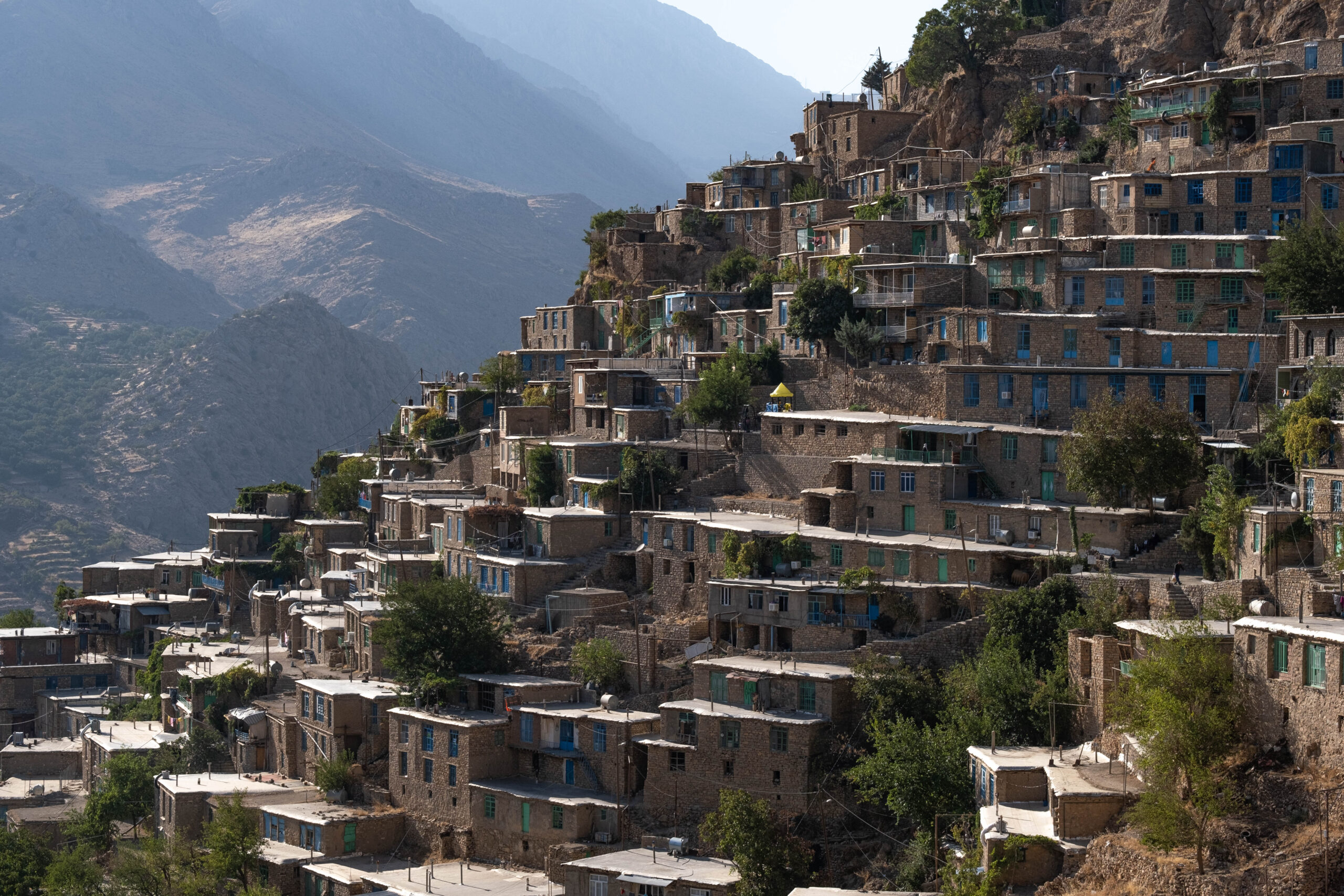
Image: Lenka Hrabalová