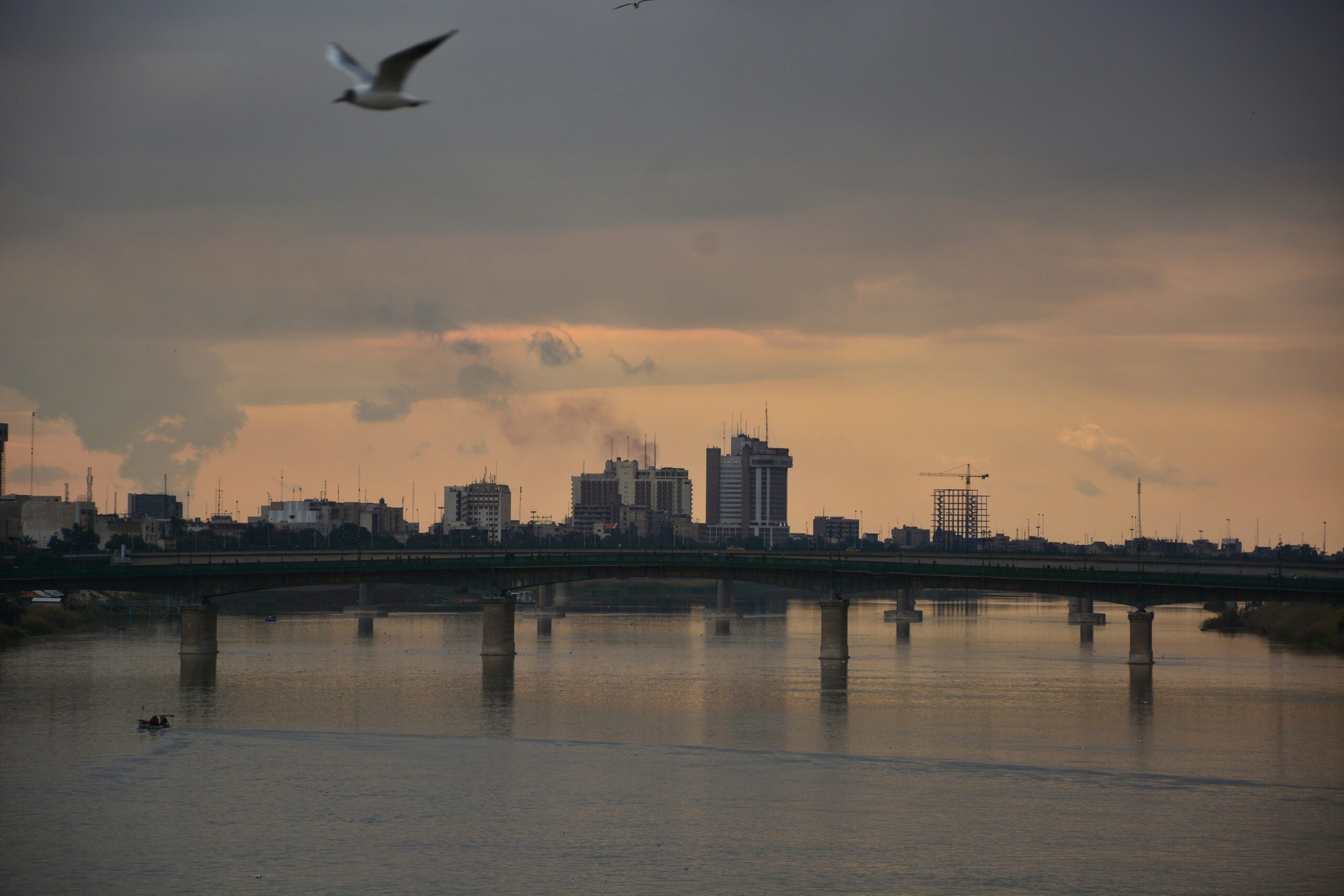
On Monday, March 16, 2026, a drone struck the top floors of the Royal Tulip al-Rasheed Hotel in Baghdad’s Green Zone, which houses many diplomatic missions. The hotel hosts the European Union Advisory Mission in Iraq, the Saudi Embassy, and the Embassy of Finland, among others. The attack shows the inability of the Iraqi government to stop the attacks. Moreover, it shows the difficulty for Europe to stay out of the war, also after the drone strike on Cyprus on March 1.
The attack was not officially claimed, but came after the Iran-backed group Kataeb Hezbollah said on Monday that its senior commander and security spokesperson, Abu Ali al-Askari, was killed in a strike reportedly carried out by the United States.
”Tonight attacks on Al Rashid Hotel in Baghdad and US Embassy in Green Zone in Baghdad and Victory base in BIAP plus attacks on Erbil mean an all-out war by the Iraqi militias to broaden the conflict and engulf the country in the current military conflict,” former Iraqi Foreign Minister and senior Kurdish politician Hoshyar Zebari posted on X last night.
Iraq has increasingly become part of the war between Iran and the United States and Israel, with hardline groups within the Iran-backed Shia paramilitary Popular Mobilization Forces (PMF), created in 2014 to fight ISIS, carrying out drone attacks on oil fields, Iranian Kurdish opposition groups, diplomatic facilities, and hotels. Iran has also carried out attacks in Iraq, yet the attacks have increasingly been carried out by the PMF.
In response, the United States and Israel have increased airstrikes on PMF locations in Baghdad, Diyala, Kirkuk, Anbar, Nineveh, Salah al-Din, Wasit, and Babil. For instance, on March 16, the PMF said six fighters were killed, and four others were wounded in an airstrike in Al-Qaim. On March 12, the PMF said they were targeted by 32 airstrikes since 28 February, resulting in the deaths of 27 fighters and the injury of 50 other PMF members.
On Monday, the U.S. Embassy also warned that “Iran-aligned terrorist militias have also attacked hotels frequented by foreigners and other facilities with U.S. ties throughout Iraq, including in the Kurdistan Region of Iraq (IKR).”
While in the Kurdish capital of Erbil the Khanzad Hotel and the Erbil Rotana Arjaan Hotel were targeted—and an earlier drone crash occurred near the Divan Hotel, with uncertainty as to whether it was the intended target—the strike on the Royal Tulip al-Rasheed marks the first attack on a hotel in Baghdad during the current war.
”The Majnoon oil field, the Rashid International Hotel, and the U.S. Embassy headquarters in Baghdad have all been subjected to terrorist attacks—criminal acts with serious repercussions for our country, undermining government efforts toward development and prosperity,” Sabah Al-Numan, the Spokesperson for the Commander-in-Chief of the Armed Forces, said on Tuesday, without mentioning last night’s attacks that took place in Iraqi Kurdistan, and also condemning strikes on the Iran-backed paramilitary PMF.
”In response to these attacks, the Commander-in-Chief of the Armed Forces, Mr. Mohammed Shia’ Al-Sudani, ordered all security and intelligence agencies to track down and pursue the perpetrators and bring them to justice immediately so that they receive their rightful punishment,” al-Numan said.
However, according to David Witty, a retired US Army Special Forces Colonel and Foreign Area Officer, who has worked with Iraqi security forces in the past, it is unlikely that the government will take action.
”The Iraqi government appears powerless to restrain the militias other than ordering a series of investigations on militia attacks, which usually result in nothing,” he said.
“Iraqi militias aligned with Iran undoubtedly attacked the Rashid Hotel. The hotel is well known as a place of stay for Westerners in Baghdad & hosts a European diplomatic delegation. The militias are responsible for any number of attacks on targets associated with the U.S., such as the Diplomatic Support Center at the Baghdad Airport, the U.S. embassy, the U.S. consulate in Erbil, and Harir base in Erbil,” he added.
Mohammed A. Salih, a Non-Resident Senior Fellow in the Foreign Policy Research Institute’s National Security Program, added that, “given the frequency, the broadening scope, and the rising intensity of the militia attacks, the Iraqi federal government needs to show that it indeed has the will and some ability to confront these unruly groups that threaten to drag Iraq into war and potentially bring crushing economic sanctions on the country.”
Nevertheless, he added, “to be fair, no one expects Baghdad to militarily disarm these groups, at least not now. But Baghdad can name these groups publicly and move to cut their funding for now.”
Kamaran Palani, the Principal Investigator of the Iraq PeaceRep program at the LSE Middle East Centre, who previously stayed in the hotel, blamed the Iraqi government under Al-Sudani for failing to prevent the attack. “Before framing it as an attack on ‘emptied’ diplomatic offices in the building, it should be recognized that Baghdad, the capital of the country, has itself been under attack by Iran’s proxies,” Kamaran Palani, the Principal Investigator of the Iraq PeaceRep program at the LSE Middle East Centre, posted on X.
The Kurdistan Regional Government (KRG) on March 15 also said that “Baghdad is not prepared to confront these terrorist attacks against the Kurdistan Region or to prevent them. To date, no effective measures have been taken to stop these assaults.”
Aziz Ahmad, deputy chief of staff to Kurdistan Region Prime Minister Masrour Barzani, on March 15, also blamed Baghdad for not taking action after increased attacks on the Kurdistan Region. According to data collected by Community Peacemaker Teams – Iraqi Kurdistan, at least 307 strikes by Iran and affiliated groups have been carried out on the Kurdistan Region since February 28, leaving 8 people killed and 51 injured.
“We always share the names of the perpetrators with the government in Baghdad. After hundreds of attacks over several years, there have been zero convictions. When a handful of symbolic arrests were made, the suspects were released on bail as a ruse to flee the country,” KRG official Ahmad wrote on X.
Salih added that the Iraqi federal government’s best idea for now seems to be issuing statements, thinking that rhetoric will somehow absolve it of the responsibility to act.
”It will not. Rhetoric is always judged against action. And the action here is zero. That has serious consequences for Baghdad’s credibility in the eyes of its own citizens, the region, partner governments, and beyond.”
According to Salih, last night’s attack is part of a steady escalation by the militias, broadening the scope of their attacks, which have recently included European targets, first military and now diplomatic as well.
”It’s essentially part of some version of a scorched earth policy that Iran follows in the region, striking all sorts of local and foreign civilian, military, and diplomatic targets to show it can wreak havoc in a variety of areas, and in a sense, an act of showing off its disruptive and destructive power.”
It is not the first time European countries have been targeted during the recent war. On 12 March, Italy confirmed that the Italian army was deliberately targeted in Erbil. Furthermore, on March 12, a French soldier was killed, and several were injured by a drone strike near the Makhmour district.
The Iranian state agency Tasnim News also justified the attacks, arguing that French forces were involved with Iranian Kurdish opposition groups. But the French Foreign Ministry denied this and underlined that French troops are deployed at the request of the Iraqi authorities and train their forces as part of the international coalition against Daesh (ISIS). According to my sources, there are also no Iranian Kurdish opposition groups near Makhmour.
On March 17, Abu Mujahid al-Assaf, who took over from Abu Ali al-Askari as security chief for Kataeb Hezbollah, announced in a statement that the previous reward of around $115,000 by the Iran-backed Islamic Resistance Group for foreign individuals accused of being spies will continue while operating “under diplomatic immunity.” He also said they will have a firm response to media outlets managed by hostile intelligence services. The statement implicates an indirect threat to diplomats or foreigners working in Iraq.
As Nicholas Heras, the Executive Director at the Washington-based Middle East Policy Council, told me, “The Iran-aligned militias struck the Rashid hotel because they view it as a symbol of Western dominance over Iraq. It is their way of declaring to European countries that there is no safe space for actors like the European Union, who they view as enabling the U.S. in the region.”